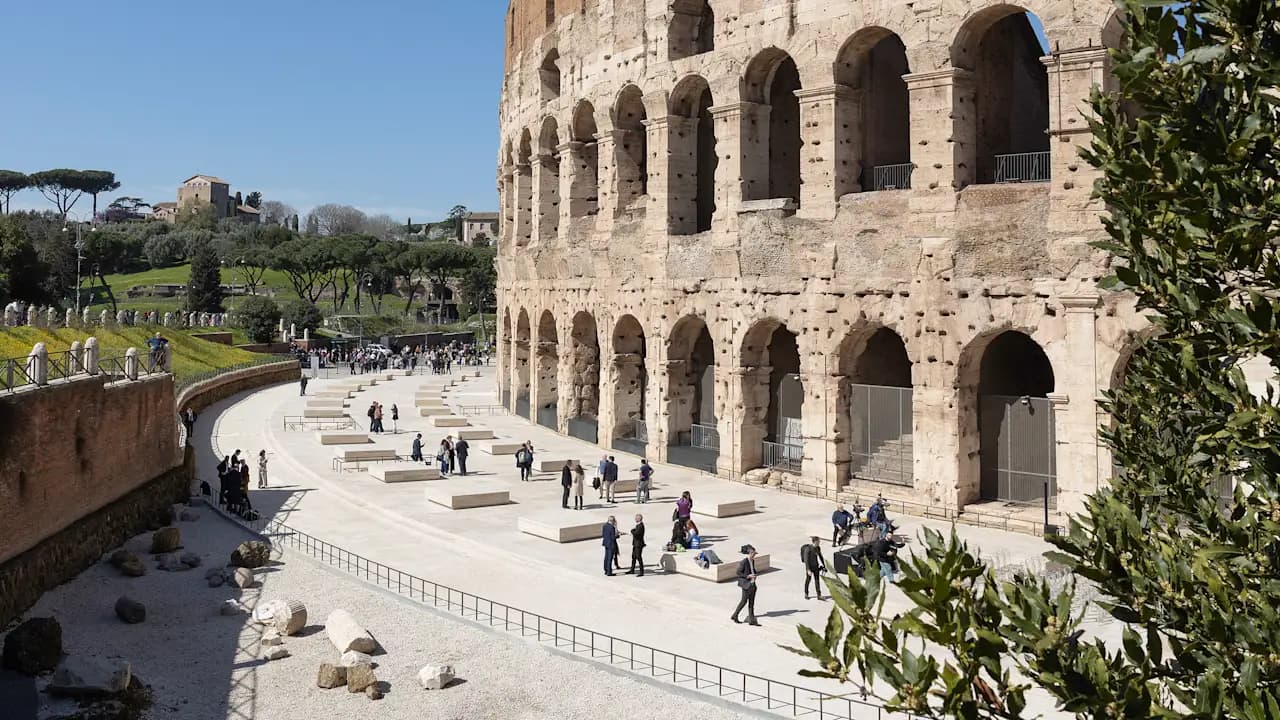
Photo via Fast Company
Rome's iconic Colosseum has undergone a carefully designed renovation of its southern perimeter, revealing what the 2,000-year-old structure looked like at its completion in 96 A.D. According to Fast Company, architect Stefano Boeri and the Parco Archeologico del Colosseo worked together to restore the original ground levels and reconstruct the crepidine—a two-step plaza base—based on decades of archaeological research. The project required sensitive design choices that honored the monument's historical significance without overshadowing it with contemporary interventions.
The restoration work centered on recreating the visitor experience as it existed nearly two millennia ago, when Roman emperors would enter the amphitheater from this side. Boeri explained that by restoring the original ground surface, visitors now literally walk on the same level as ancient patrons did. The team used abstract white marble blocks to outline where missing arcade pillars once stood, creating visual 'ghosts' of lost structures that help people understand the monument's full original scale and proportions.
Beyond historical accuracy, the project tackled modern infrastructure challenges. The restoration allowed engineers to redesign the site's stormwater drainage system, routing water more effectively to prevent further erosion—a practical consideration that extends the monument's lifespan for future generations. The renovation also expanded public access by approximately 33,000 square feet, opening previously restricted areas and making portions of the site freely accessible without requiring admission.
The Colosseum project illustrates how heritage sites can serve contemporary communities while respecting their historical context. For Atlanta's growing real estate sector, the model suggests that major restoration and redevelopment projects can balance preservation, public access, and forward-thinking infrastructure. Whether renovating historic districts or adaptive-reuse projects, local developers might consider how archaeological and historical research can inform design decisions that strengthen both a property's authenticity and its long-term viability.