Photo via Fast Company
Anduril, founded in 2017 by former Palantir executives and tech entrepreneurs, is fundamentally changing how defense contractors approach product development and marketing. Unlike traditional aerospace giants like Lockheed Martin and Boeing, Anduril operates as a lean product company—forecasting future military needs and investing its own capital to develop autonomous systems it believes will become indispensable to government buyers. With an estimated $2.1 billion in revenue in 2025 and potential government contracts worth $50 billion over the coming decade, the company's valuation has surged 40% as investors anticipate a 2027 IPO.
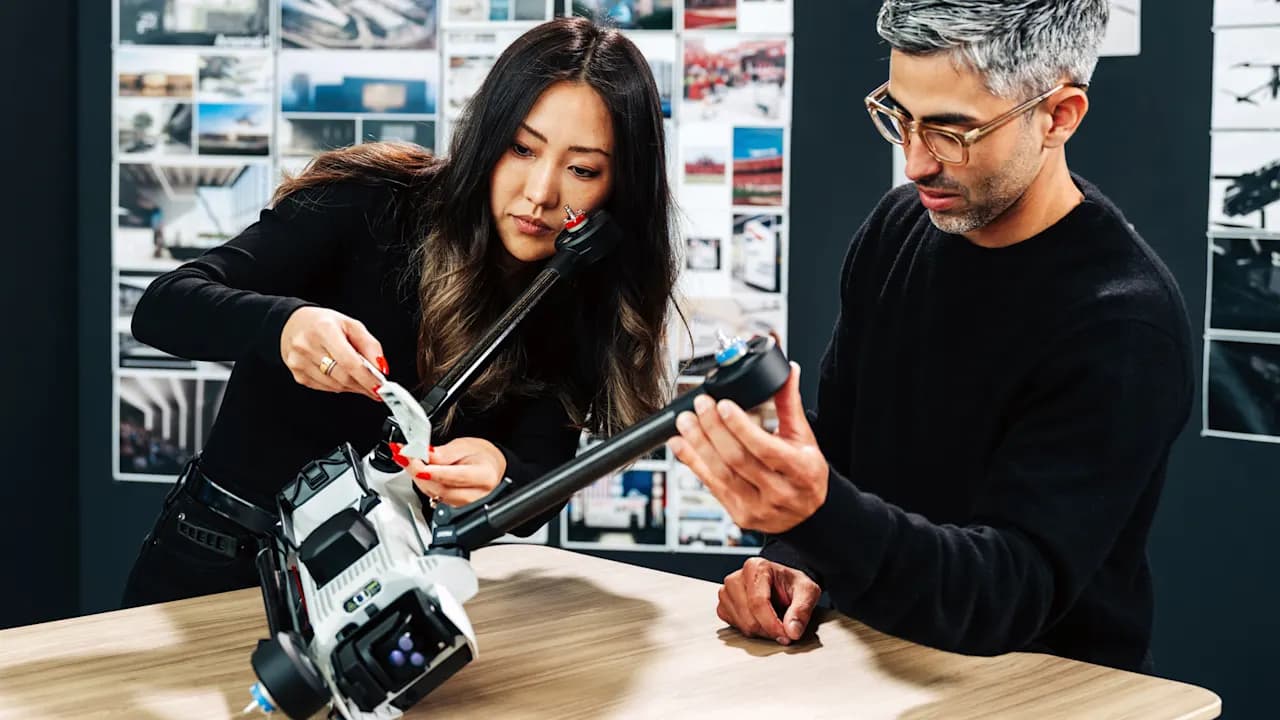
The company's competitive edge lies in its deliberate focus on design as a core business function, not an afterthought. Jen Bucci, head of design, oversees a 50-person team that extends far beyond industrial design—encompassing brand strategy, motion graphics, and even product storytelling. This approach mirrors consumer tech companies like Apple and SpaceX, applying rigorous design discipline to weapons systems, submarines, and surveillance platforms. Anduril's products feature consistent design language: gunmetal finishes accented with safety yellow, modular construction for field repairs, and cohesive branding across its entire arsenal.
Bucci's strategy has successfully rebranded military equipment as aspirational rather than purely utilitarian. The company's anime-styled marketing videos and sleek product visualizations have attracted design talent that previously avoided defense work. According to Bucci, when she joined Anduril in 2021, design roles went unfilled; today, positions receive hundreds of applications. This shift reflects broader changes in how younger engineers and designers view defense work—particularly as geopolitical tensions and increased military spending have normalized the sector.
The implications extend beyond Anduril's bottom line. The startup has already designed liveries for U.S. Air Force equipment, effectively branding military assets themselves. As the company scales toward an IPO, its model challenges how traditional defense contractors approach innovation and talent acquisition. For Atlanta's emerging tech sector, Anduril's rise demonstrates how design-centric thinking—long associated with consumer tech—can disrupt even the most established industries.