Photo via Fast Company
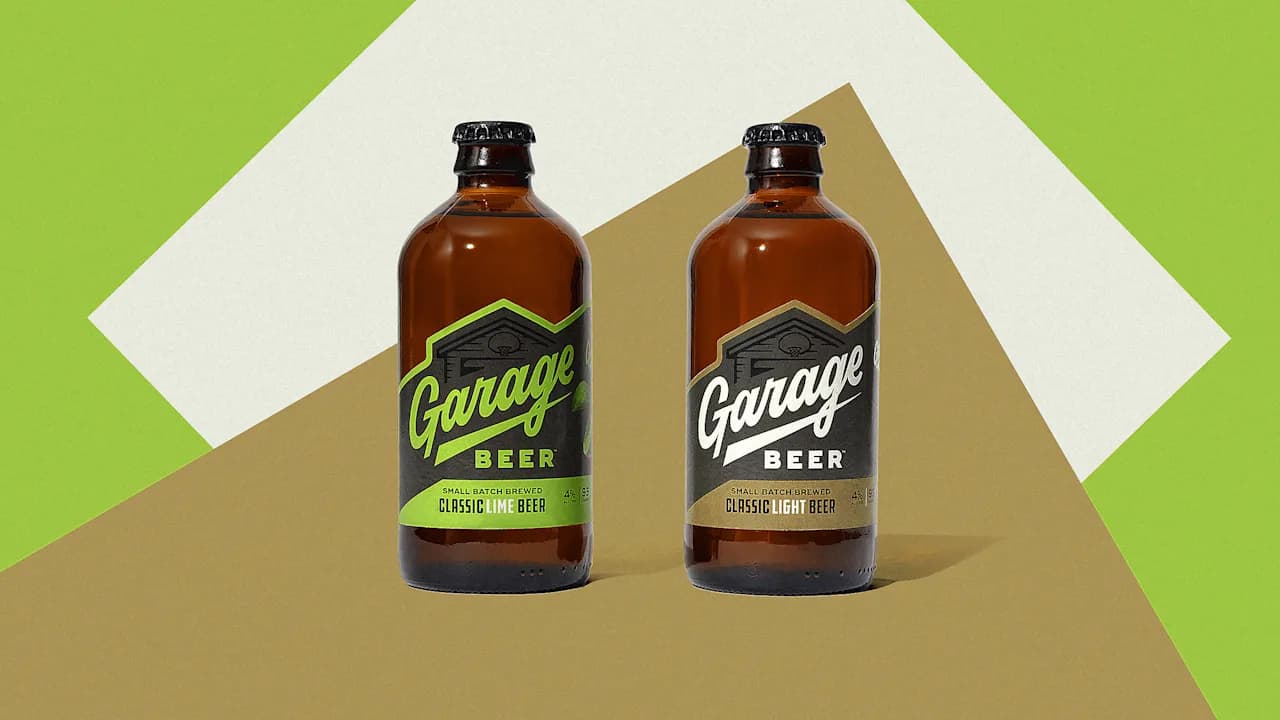
Garage Beer, the rapidly expanding light beer brand backed by NFL stars Jason and Travis Kelce, debuted custom glass bottles in mid-April, marking a strategic expansion of its product lineup. Rather than opting for a traditional long-neck design, the company chose a retro stubby bottle—a stout, short-necked form factor that harkens back to 1970s-era packaging. The custom-made bottle maintains dimensions nearly identical to a standard aluminum can but delivers the heft and premium feel of dark-brown glass, signaling a shift in how the brand is positioning itself in retail environments.
The packaging move reflects Garage Beer's broader brand philosophy of stripped-down simplicity. In an industry where competitors routinely launch new flavor variants, low-calorie sub-brands, and marketing gimmicks, Garage has maintained laser focus on its core product: an affordable light beer available in original and lime flavors. According to Eric Torgerson, the company's chief operating officer, any new offering must align with the brand's old-school identity. "We wanted to make sure we were staying true to our brand identity of old school beer the way it should be," Torgerson explained, calling the new bottle a "bottle-shaped bottle."
The company's growth trajectory underscores the commercial viability of its minimalist approach. Since founder Andy Sauer relaunched the brand in 2023 after acquiring it from Kentucky-based Braxton Brewing, Garage has posted triple-digit year-over-year growth, with sales surging over 500 percent in the 12 months ending in early April. The Brewer's Association recently ranked it as the nation's 12th largest craft brewer, and Wall Street Journal reporting valued the company at approximately $200 million—all while the broader craft beer industry faces significant headwinds.
Customer demand directly informed the final bottle design. Torgerson's team surveyed fans on various glass bottle styles before settling on the stubby format, which proved most popular among Garage's core audience. The company tested the final design by sharing prototypes with friends and employees, validating the approach through informal consumer feedback. Going forward, the glass bottles will roll out alongside cans at retailers nationwide, with Torgerson indicating that glass will become "a huge component of the business," particularly in retail settings where distinctive packaging drives shelf visibility.