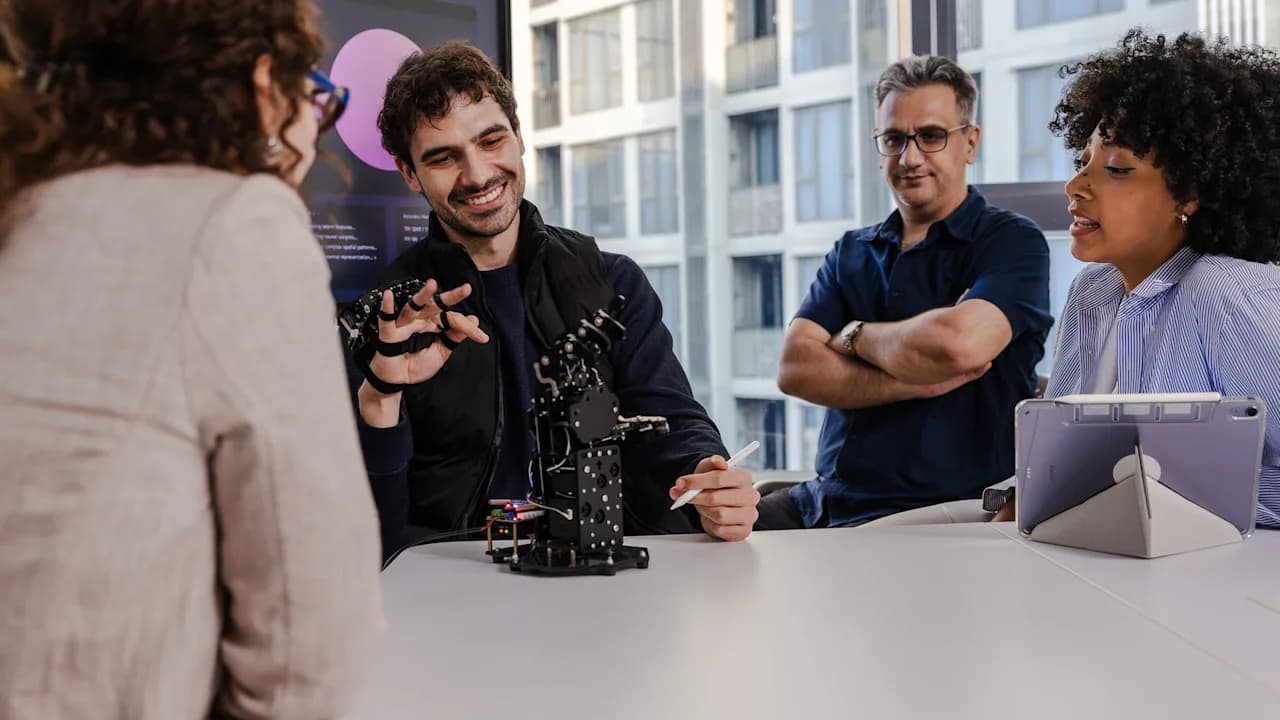
Photo via Fast Company
As artificial intelligence accelerates across industries, LinkedIn CEO Ryan Roslansky and Chief Economic Opportunity Officer Aneesh Raman are urging Atlanta-area professionals to shift how they think about their work. Rather than fearing job displacement, they argue, workers should recognize that AI targets specific tasks, not job titles. By breaking down your daily work into three categories—tasks AI can handle independently, tasks requiring human-AI collaboration, and irreplaceably human work—professionals can strategically position themselves for long-term career resilience.
The two executives identify what they call the 5Cs as the core competitive advantages no algorithm can replicate: curiosity, courage, creativity, compassion, and communication. For Atlanta's growing tech sector and established corporate community alike, these soft skills represent survival tools in a rapidly evolving economy. Raman and Roslansky argue that professionals who cultivate these distinctly human capabilities—especially the ability to build relationships, make judgment calls under uncertainty, and inspire teams—will find themselves irreplaceable regardless of AI's capabilities.
Another critical mindset shift involves reconceiving career progression. The traditional ladder model, where workers climbed steadily within a single organization, no longer applies. According to their book 'Open to Work,' tomorrow's workforce will change jobs twice as often as previous generations. For Atlanta professionals, this means embracing a 'climbing wall' mentality: lateral moves, skill-building detours, and intentional pivots become legitimate strategies rather than career missteps.
Raman and Roslansky emphasize that the window for adaptation is narrow. With AI adoption accelerating faster than previous technological shifts, the time to experiment with new tools and skill-building is now. Atlanta's business leaders should encourage teams to stop conforming to standardized job descriptions and instead lean into the unconventional experiences, diverse perspectives, and unique problem-solving approaches that machines cannot replicate. In a world where AI handles routine work, individual distinctiveness becomes the ultimate competitive edge.