Photo via Fast Company
The American manufacturing sector faces an unexpected bottleneck: a severe shortage of skilled welders. According to the American Welding Society, the U.S. will need to hire approximately 80,000 new welding professionals annually to meet a projected demand of 320,000 workers by 2030. For Southeast manufacturers—particularly those in shipbuilding, heavy fabrication, and data center construction—this talent gap represents a significant threat to growth and competitiveness.
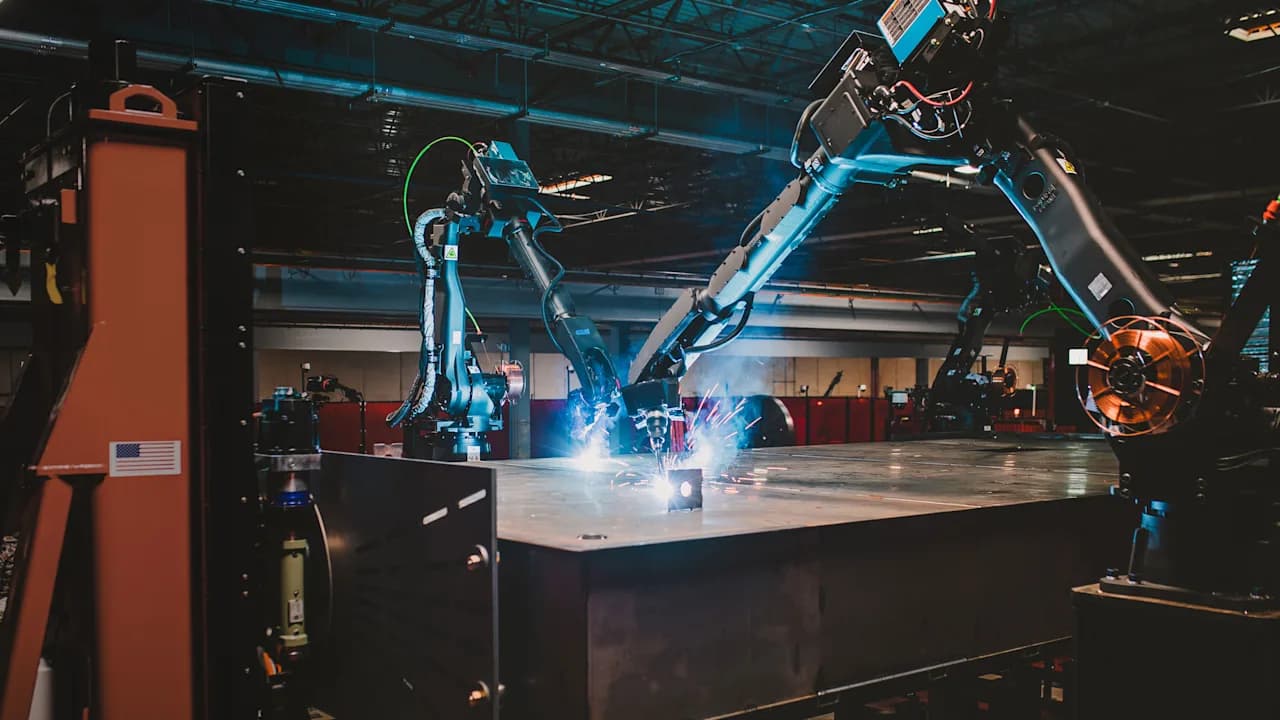
Path Robotics, a Columbus, Ohio-based startup with $341 million in funding, is tackling this challenge with Rove, an autonomous welding robot that combines advanced AI with Boston Dynamics' mobile robotics platform. Unlike traditional manufacturing robots confined to assembly lines, Rove is designed for unstructured environments where precision work varies from project to project. The company's Obsidian AI system allows the robot to adapt to different welding scenarios, performing complex work in shipyards, construction sites, and heavy industrial settings where human welders currently struggle to keep pace with demand.
Co-founder Andy Lonsberry credits his family's failed custom vehicle manufacturing business for inspiring the company's mission-driven approach. Rather than relocating to Silicon Valley, Path chose to remain in the Midwest and build partnerships directly with manufacturers. The strategy has already helped smaller firms across the region—including steel fabricators in Minnesota and Wisconsin metalworking companies serving data centers—expand operations without being constrained by labor availability.
For Atlanta-area manufacturers and construction firms, the technology signals both opportunity and urgency. As companies compete for limited welding talent, early adoption of autonomous solutions could provide competitive advantages in industries ranging from shipbuilding to power infrastructure. With Rove expected to enter commercial markets in 2027, regional manufacturers should begin evaluating how this technology fits into their long-term workforce and production strategies.