Photo via Fast Company
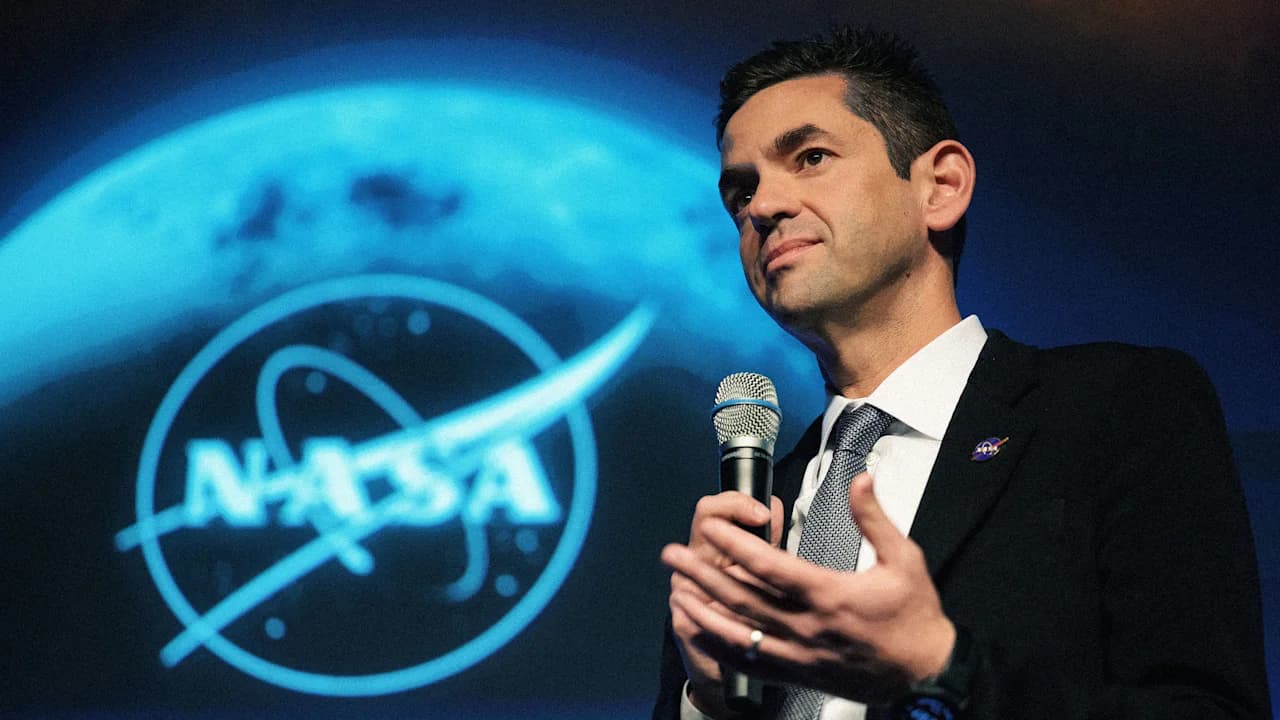
Following the successful Artemis II mission, NASA Administrator Jared Isaacman is sounding the alarm about an accelerating space race with China that could reshape American technological leadership. Speaking to Fast Company, Isaacman emphasized that unlike the leisurely pace of 1960s space exploration, today's competition demands rapid execution—where success or failure will be measured in months, not years. This urgency underscores why NASA is pushing for sustained funding and policy alignment on Capitol Hill to maintain U.S. superiority in space exploration.
The focal point of this competition centers on the lunar South Pole, a region roughly the size of Washington, D.C., where both the United States and China aim to establish permanent bases. According to Isaacman, this territory is critical because it contains water ice essential for manufacturing propellant and other resources needed for sustained lunar operations and eventual Mars missions. The race to control this strategic location has become central to America's broader space strategy and represents what Isaacman calls 'one of the most consequential competitions of our time.'
Isaacman argues that nuclear power and propulsion technology are essential for American dominance in space. Rather than viewing these systems as futuristic luxuries, he frames them as practical tools for efficiently transporting mass across the solar system—comparable to train locomotives rather than aircraft. The same reactor designs will support surface power operations on both the moon and Mars, making investment in nuclear technology a cornerstone of long-term space exploration capabilities.
For Atlanta-area defense contractors, aerospace suppliers, and technology firms, this competitive environment creates both challenges and opportunities. As NASA concentrates resources on lunar and Martian missions, regional companies in Georgia's growing aerospace sector could find expanded contract opportunities with NASA and its private partners. The administrator's call for realigned priorities and increased funding signals that companies positioned to support advanced propulsion, materials science, and space infrastructure development may benefit from accelerated government investment in the coming years.