Photo via Fast Company
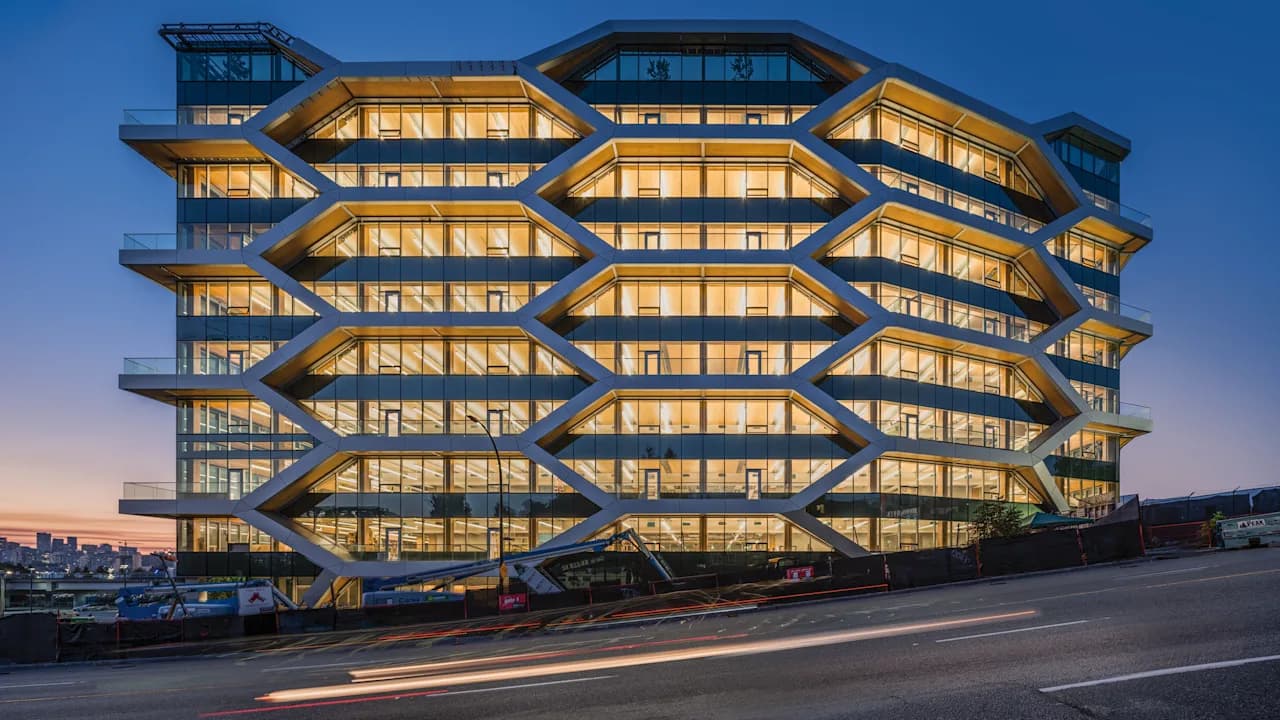
The construction industry is experiencing a renewed interest in mass timber as a primary building material, driven by both environmental benefits and structural advantages. Vancouver's recently completed Hive office building—the tallest seismically-resistant structure of its kind in North America—demonstrates the viability of large-scale wood construction. The 10-story building sequesters approximately 4,403 metric tons of carbon dioxide, equivalent to removing 1,300 vehicles from roads annually, making it an attractive option for developers prioritizing sustainability.
Regulatory barriers have historically limited mass timber adoption across North America. Building codes and insurance requirements have favored steel and concrete since the Industrial Revolution, creating higher approval costs and insurance premiums for wood-based projects. However, architects and engineers are increasingly demonstrating that wood actually performs better during seismic events than rigid concrete or steel structures. According to Dialog, the Toronto firm that designed the Hive, wood's flexibility allows buildings to absorb earthquake forces rather than resist them—an ancient principle used in Japanese architecture for centuries.
The Hive's innovative design incorporates specialized 'tectonic joints' that allow beams to shift microscopically during seismic activity, enabling the structure to flex and recenter without permanent damage. This technology, tested at the University of Alberta, addresses safety concerns that previously hindered tall timber projects. The building's perimeter-braced structural system eliminates the need for traditional concrete cores, further reducing environmental impact while maintaining structural integrity.
The momentum behind mass timber construction is accelerating, with approximately 2,700 projects either completed or underway across the United States—double the number from 2022. Major North American cities including New York and Milwaukee have embraced timber projects, signaling a broader industry shift. For Atlanta developers and real estate professionals, monitoring this trend could offer opportunities to participate in sustainable construction practices while potentially accessing new financing incentives as government support for wood innovation continues to grow.