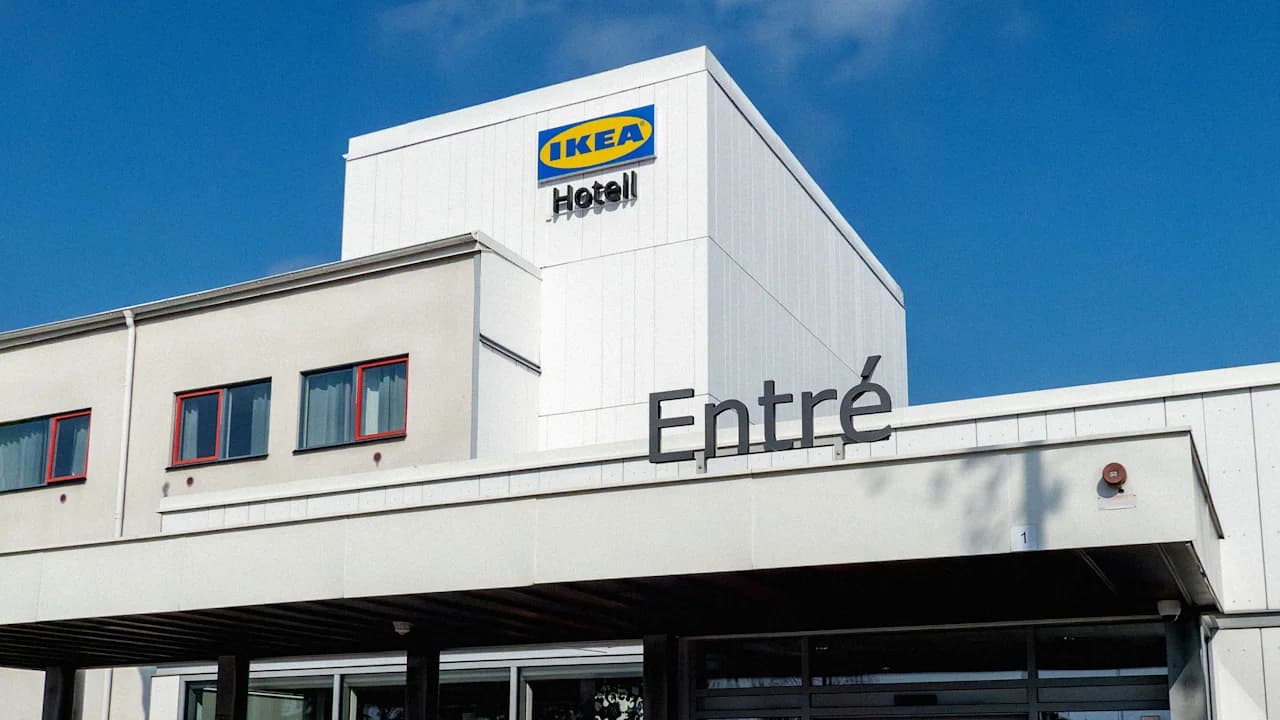
Photo via Fast Company
Ikea operates the world's only branded hotel in Älmhult, Sweden—the town where the furniture giant was founded and still maintains its headquarters. According to Fast Company, the Ikea Hotell has evolved from a roadside motel built in 1963 to serve customers traveling long distances to shop, into a 254-room property that serves as a living showroom for the company's design philosophy. The hotel demonstrates how a major retailer can leverage heritage and location to create experiential spaces that extend brand engagement beyond traditional retail.
The property showcases what Ikea calls "democratic design"—affordable, functional furnishings that prioritize accessibility over luxury. Room rates start at $60 per night for compact 45-square-foot cabins, while double rooms run $90–$150 nightly. Every element, from desk lamps to throw pillows, is an Ikea product, yet the company notably avoids aggressive selling tactics like price tags or promotional signage. This restraint reflects a broader strategic approach: the hotel serves business travelers and museum visitors rather than functioning as a captive retail environment.
The facility represents a predecessor to today's trend of branded hospitality, where companies like home goods retailers increasingly create immersive shopping experiences. For Atlanta-area business leaders exploring experiential retail strategies, Ikea's model offers lessons in balancing brand immersion with guest comfort. The company's upcoming 2028 renovation—adding nearly 300 rooms, expanded conference space, and restored amenities like an indoor pool—signals confidence in the venue's role within the broader business ecosystem.
Ikea's hotel strategy illustrates how legacy brands can monetize heritage locations while reinforcing corporate identity. As the company prepares its expansion, the property will likely attract more corporate retreats and conferences, transforming it into a destination for international business travel. For Atlanta retailers and hospitality operators watching industry trends, the Ikea model demonstrates the long-term value of intentional, brand-aligned space design.