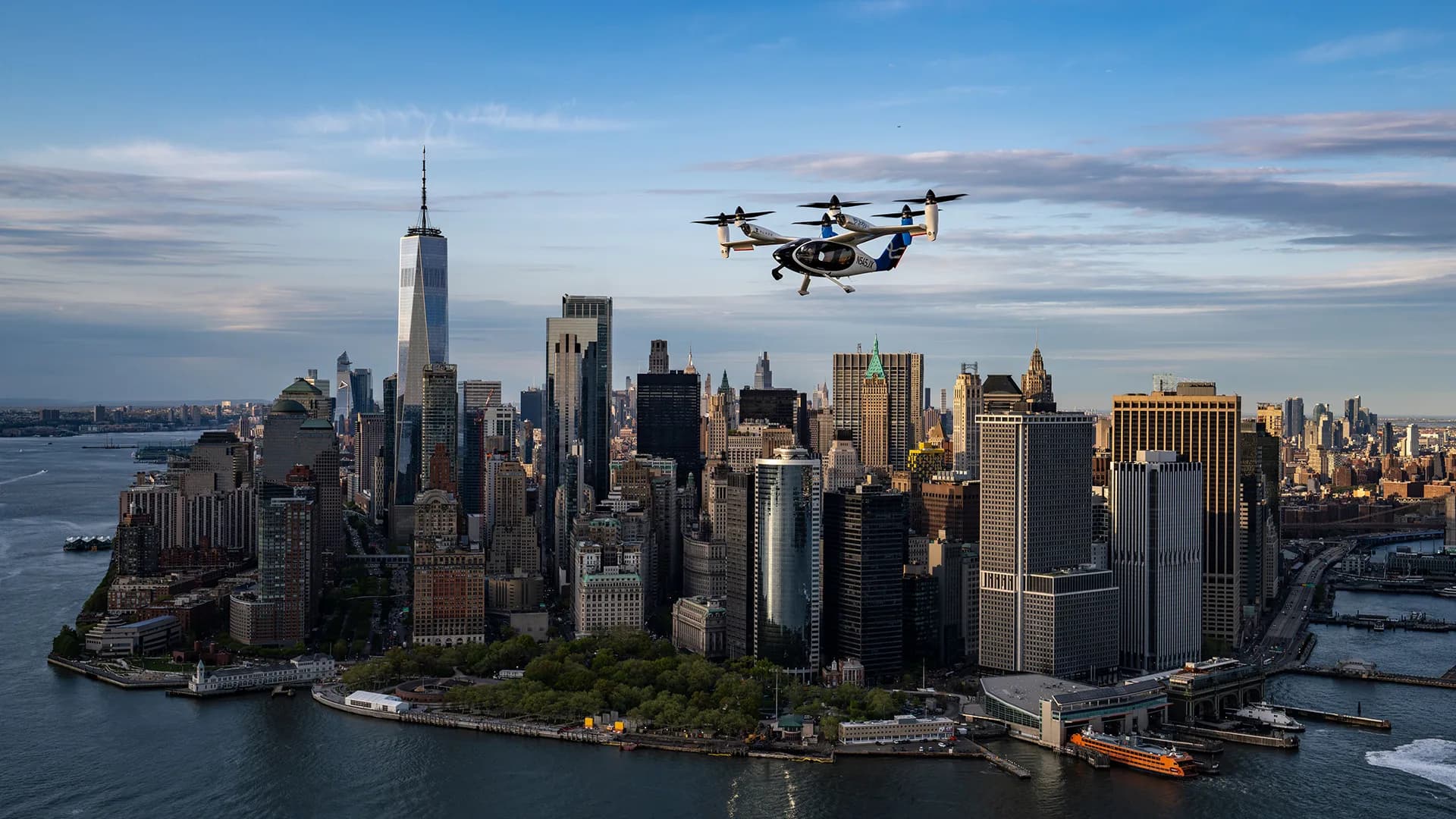
Photo via Inc.
Electric vertical takeoff and landing aircraft (eVTOL) are moving from concept to reality. According to Inc., test flights connecting Manhattan to JFK Airport are already underway, marking a significant milestone in the commercialization of air taxi services. This represents a critical step toward integrating urban air mobility into existing transportation networks.
For Atlanta business leaders, the implications are substantial. Hartsfield-Jackson Atlanta International Airport, one of the world's busiest, could become a natural hub for air taxi operations as the technology matures. The logistics and transportation sectors—key components of Atlanta's economy—may see disruption and opportunity as air taxis offer speed advantages for time-sensitive deliveries and executive travel.
The regulatory landscape remains a work in progress. Federal Aviation Administration approval is essential for broader deployment, and questions about infrastructure, safety protocols, and urban airspace management must be resolved. Atlanta's growing tech corridor and proximity to major corporate headquarters position the region to participate in solving these challenges through engineering and policy innovation.
As these services expand beyond New York, Atlanta companies should monitor developments closely. Early adoption of air taxi infrastructure could provide competitive advantages in logistics, executive recruitment, and customer service. The next few years will determine whether this technology becomes a standard feature of metropolitan transportation or remains a niche service.